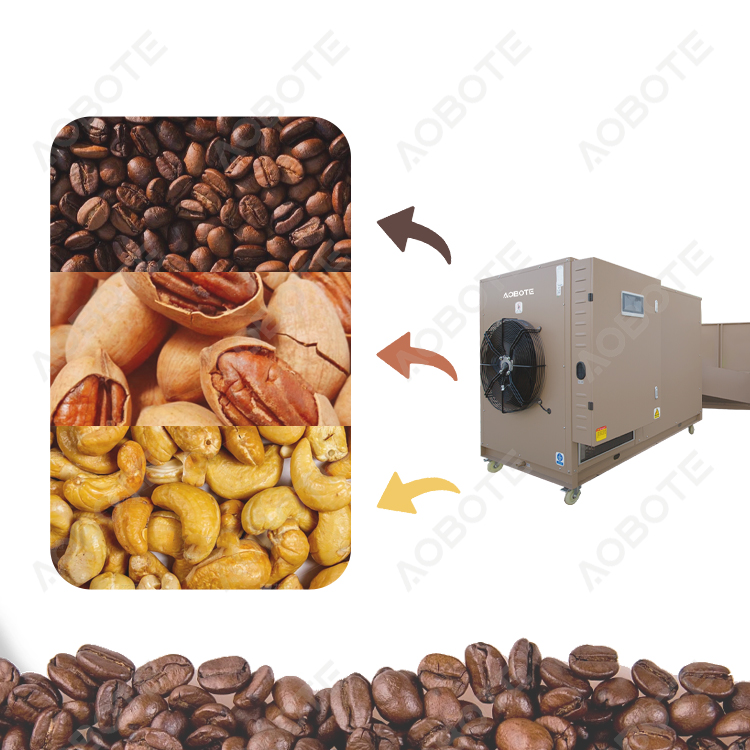
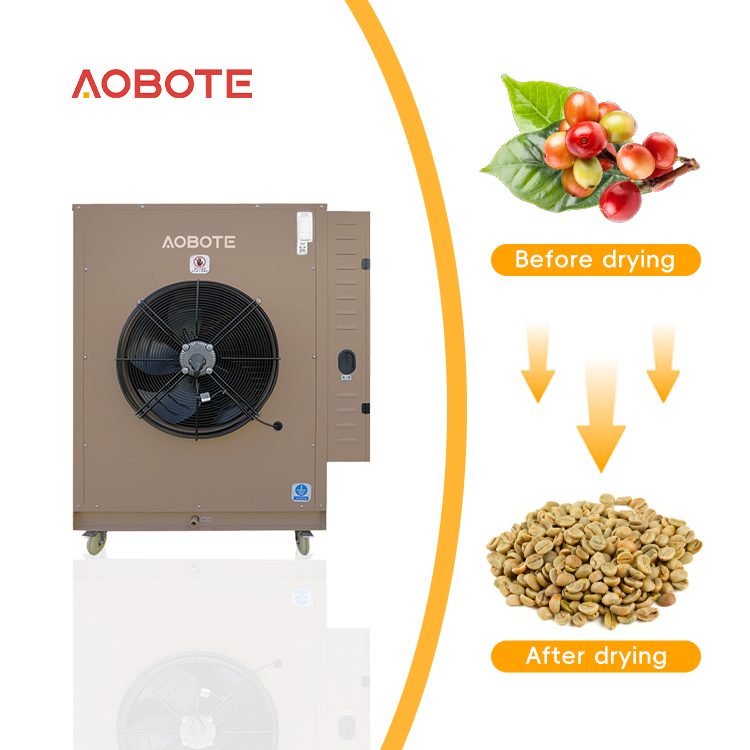
Coffee earns its price in the drying stage. Dry it too hot and the aroma burns off; dry it unevenly and defects creep in; dry it with a diesel burner and the beans carry the smell to the cup. The AOBOTE coffee bean heat pump drying solution uses clean, low-temperature (40-50 °C) dehumidified air with automatic moisture control — from fresh cherry and parchment down to the 10-12% export-standard moisture.
We run what we build: AOBOTE operates its own coffee drying lines in Yunnan, so the curves we recommend are the curves we run every season.
The Coffee Drying Challenge
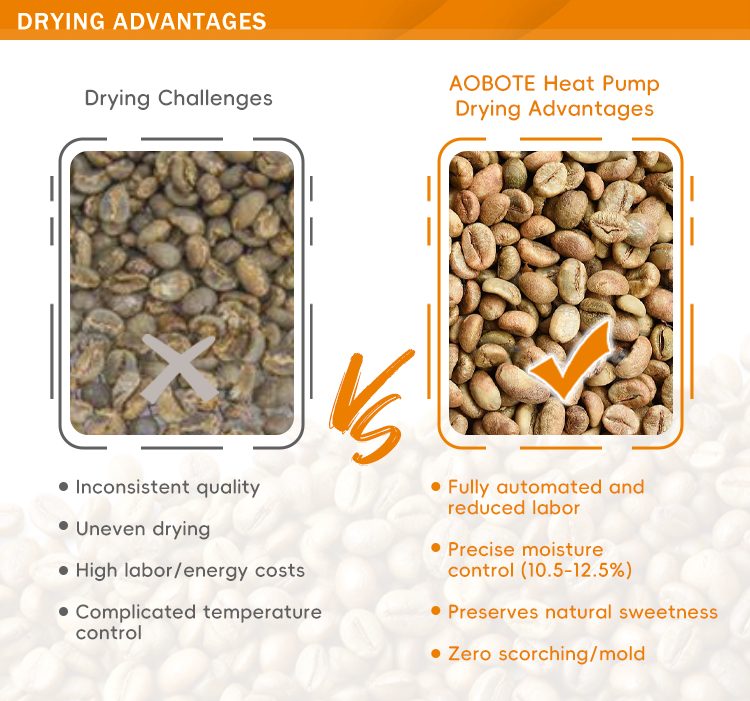
- Aroma is volatile — temperatures above roughly 55 °C strip the compounds buyers cup for.
- Fuel contamination — diesel and coal flue gases taint the beans; exporters reject such lots.
- Weather risk — sun drying on patios is slow, dusty and hostage to rain.
- Uneven moisture — mixed-moisture lots crack during hulling and lose grade.
Why a Heat Pump Dryer for Coffee
- Clean, closed-loop air — no combustion gases ever touch the beans.
- Precise 40-50 °C control — protects aroma, color and germination quality for seed lots.
- 60-70% lower energy cost versus electric or fuel-fired heating.
- Repeatable profiles — PLC recipes for cherry, parchment and green-bean stages.
Recommended Process
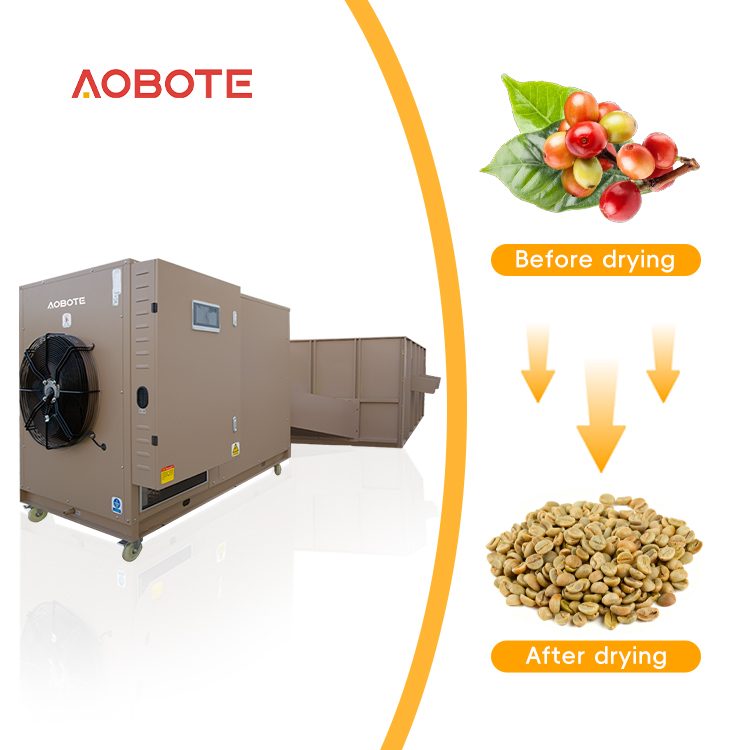
Stage 1: surface moisture removal at moderate airflow. Stage 2: steady 40-50 °C drying to the target moisture. Stage 3: conditioning pause for moisture equalization. Batch sizes from 2 t up to 6 t+ per cycle on flat-bed configurations, or continuous flow on our Continuous Belt Dryer for large estates.
Machine Options
- 2 t / 4 t / 6 t flat-bed dryers — the estate workhorse; pictured below.
- 1-ton rotary drum — 5HD-1000-HW for tumbling evenness on parchment.
- Continuous belt lines — for harvest-peak throughput.
FAQ
Will the dryer work for washed, honey and natural process lots?
Yes — each process needs a different curve and loading density; the PLC stores recipes for all three.
We currently dry with diesel. Can we switch?
Yes — heat pump retrofits are straightforward and remove the flue-gas problem entirely; most clients recover the investment through fuel savings within one to two seasons.
Do you support traceable, contaminant-free lots?
The closed-loop chamber keeps fuel gases away from the beans, and the logged curves provide process documentation for audits.
Related
More solutions: Herbs & Roots · Tea & Flowers · Meat & Seafood · 1-Ton Drum Dryer